
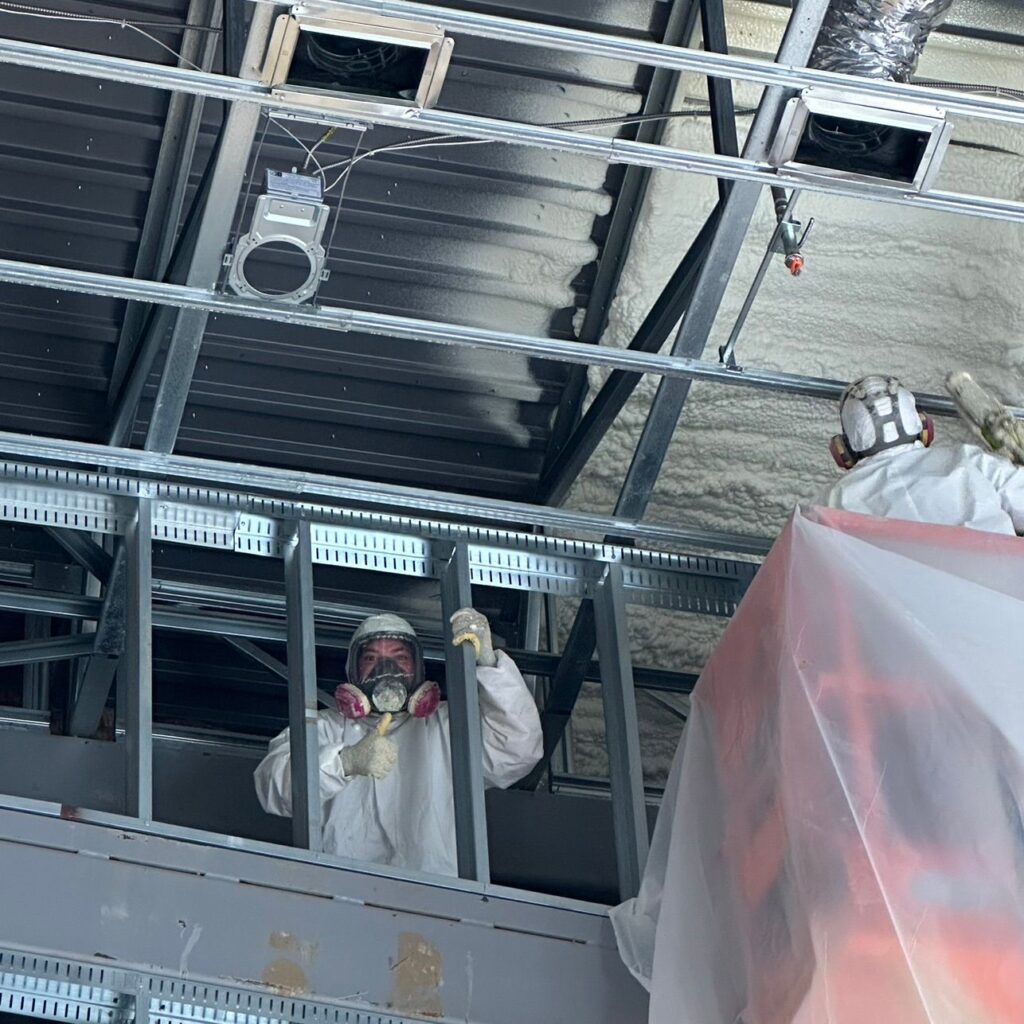
Choosing an insulation subcontractor is about more than filling cavities. The right partner helps protect your schedule, coordinate with other trades, and deliver an insulation system that meets the project specifications and is ready for inspection before it is concealed.
For commercial contractors and builders in Western Kentucky, Northwest Tennessee, Southern Illinois, and Southeastern Missouri, these are the key factors to evaluate when hiring commercial insulation contractors.
1. Look for experience with the materials your project requires
Commercial work can involve multiple assemblies, materials, and installation conditions. A capable subcontractor should be able to discuss how the specified material fits each part of the project, not simply offer one product for every application.
Depending on the design and scope, options may include:
- Open-cell spray foam, which expands into gaps and can provide air sealing and sound control.
- Closed-cell spray foam, a denser option with higher insulating value per inch and moisture-resistant properties. It may be appropriate for assemblies where those performance characteristics are specified.
- Fiberglass batts, a familiar, cost-conscious option for properly sized cavities.
- Blown-in insulation, including blown-in-wall systems designed to fill enclosed cavities around wiring and other obstructions.
- Rockwool, also called mineral wool, which may be specified for thermal, acoustic, or fire-performance needs.
Ask prospective subcontractors for examples of work that match your building type, assembly, and scope. A contractor looking for a spray foam insulation contractor should ask about experience with both open-cell and closed-cell applications. Builders specifying batts, blown-in materials, or rockwool should confirm the crew knows how to install those products to the project requirements.
Armored Insulation provides spray foam, batts, blown-in systems, and mineral wool insulation. Learn more about our spray foam insulation, batt insulation, blown-in-wall insulation, and mineral wool insulation.

2. Confirm the crew can handle the project’s size and scope
A subcontractor should have the people, equipment, and planning to match your project. That matters whether you are coordinating insulation for a single new-construction home, a multi-building development, or a large commercial space.
Before award, discuss:
- The project’s size, building type, and insulation scope.
- Crew availability and the field lead assigned to the work.
- Access requirements, such as lifts or other equipment.
- How the subcontractor will sequence work across areas or buildings.
- Whether the team can adjust when the schedule or site conditions change.
The goal is to find a subcontractor that can scale the work without losing control of installation quality or communication. Armored Insulation serves projects of different sizes across Western Kentucky and surrounding regions, including work around Paducah, Murray, and Mayfield, Kentucky.
3. Evaluate scheduling and trade coordination
Insulation is often installed after framing and mechanical rough-ins, but before drywall, ceilings, or other finishes conceal the assembly. A missed start date or unfinished area can affect the work of several trades that follow.
Ask how the insulation subcontractor will coordinate around:
- Framing and mechanical rough-in completion.
- Required inspections and access to the work area.
- Material delivery and installation sequence.
- Other trades working in shared areas.
- Punch-list corrections before walls or ceilings are closed.
A reliable partner confirms readiness before mobilizing, communicates when site conditions affect the work, and gives the general contractor timely updates. Clear coordination helps reduce return trips and avoids closing an assembly before the insulation work is ready for review.

4. Ask about safety practices and relevant certifications
Insulation work may involve elevated work areas, lifts, equipment, airborne materials, and, when spray foam is installed, chemical handling and ventilation requirements. Safety should be part of the project plan, not an assumption.
Ask for a site-specific explanation of how the subcontractor addresses worker protection, access equipment, work-area controls, and coordination with other crews. For spray foam, ask how the spray area is managed and how the subcontractor follows the product manufacturer’s safety and re-entry guidance. OSHA provides information on respiratory protection in construction and ventilation for insulation and sealing work.
Also confirm whether the team’s qualifications match the work. Armored Insulation’s team page identifies CPI-certified spray foam technicians. You can meet the Armored team.
5. Check how the team verifies finished work
Insulation quality depends on correct material placement and coverage throughout the specified assembly. Gaps, voids, compressed batts, or incomplete spray foam coverage can undermine the intended performance and create issues during inspection.
Ask how the subcontractor checks work before it is concealed. Depending on the material and project requirements, that may include confirming:
- The material, thickness, and coverage match the approved scope.
- Batts fit the cavity without gaps, folds, or unnecessary compression.
- Blown-in insulation fills the intended cavity consistently.
- Spray foam is applied in accordance with product requirements and the project specification.
- Transitions and areas around framing, penetrations, and obstructions receive appropriate attention.
- Deficiencies are corrected and ready for review before drywall or other finishes proceed.
A detailed installation plan helps the insulation work meet the project requirements the first time and makes inspections easier to coordinate. For commercial insulation for new construction, review the drawings and specifications with the subcontractor before work begins, especially where different materials meet or where other trades pass through the assembly.
6. Choose a subcontractor who communicates clearly
The insulation sub should be accessible before, during, and after installation. Clear communication helps the general contractor address readiness issues early, keep the schedule current, and avoid confusion about scope or responsibility.
Look for a team that will:
- Confirm the areas and assemblies included in its scope.
- Raise access or sequencing concerns before they affect the schedule.
- Communicate when site conditions differ from the plan.
- Coordinate with the superintendent and other trades.
- Follow up on inspection comments and outstanding items.
These details matter on every job, from an individual building in Mayfield to a larger commercial project near Paducah or Murray.
7. Compare pricing without ignoring scope
The lowest bid is not always the best value. A price that leaves out material, access equipment, preparation, protection, coordination, or return visits may lead to added costs and delays later.
Compare bids on the same information. Review the proposed materials, areas included, assumptions, exclusions, installation sequence, and any required follow-up. Ask questions if a price is noticeably lower than the others. The goal is a competitive proposal that covers the work properly, not a shortcut that leaves gaps in the scope.
Armored Insulation works to provide competitive pricing and customer service while keeping the project requirements in view. For projects where energy efficient home insulation is also part of a contractor’s portfolio, the same careful approach to material selection, coverage, and coordination applies.
A reliable insulation partner for your next build
The right subcontractor brings relevant material experience, a realistic schedule, safe work practices, consistent installation, and responsive communication. Those qualities help protect both the building envelope and the overall construction timeline.
Armored Insulation serves contractors and builders across Western Kentucky, Northwest Tennessee, Southern Illinois, and Southeastern Missouri, including crews working around Paducah, Murray, and Mayfield, Kentucky. We handle spray foam, batts, blown-in insulation, and rockwool for residential and commercial projects.
When you are planning an upcoming project, send us a service request. We’ll be glad to discuss your scope and next steps.