
Choosing insulation is not only a question of material cost. The right system must also fit the building layout, meet the desired R-value, cover difficult areas, and support long-term energy efficiency.
For many homeowners and contractors, the choice comes down to fiberglass batt insulation or blown-in fiberglass insulation. Both are practical, proven options. However, they perform best in different applications.
Fiberglass batts are often the budget-friendly choice for open wall cavities and straightforward new construction. Blown-in fiberglass provides more continuous coverage in attics and irregular spaces, especially around wires, ductwork, framing, and tight corners.
Fiberglass Batt Insulation: A Practical Choice for Open Framing
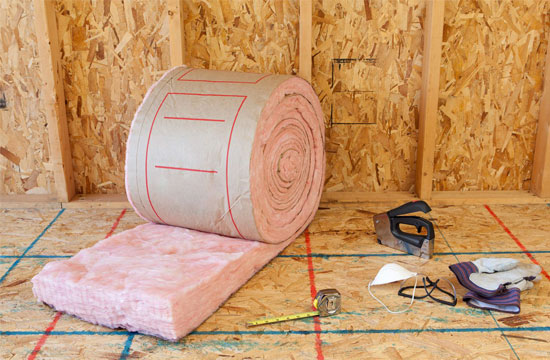
Fiberglass batt insulation consists of fine glass fibers formed into pre-sized panels or rolls. Installers cut the material to fit between wall studs, ceiling joists, and roof framing.
Batts are available in several widths, thicknesses, and R-values. They may be faced with a vapor-retarding material or left unfaced, depending on the building assembly and project requirements.
How fiberglass batts are installed
A professional installer typically:
- Measures each cavity.
- Cuts the batt to the correct length and width.
- Fits the material around wiring, plumbing, electrical boxes, and other obstructions.
- Avoids compression, gaps, and overstuffing.
- Seals penetrations and difficult areas with an appropriate air-sealing material.
The quality of the fit matters. A batt that is too short can leave a gap. A batt that is compressed may lose some of its designed performance. Careful installation is especially important around electrical boxes, corners, and irregular framing.
Where batts work best
Fiberglass batts are a strong fit for:
- New construction with open stud bays
- Standard 2×4 and 2×6 wall assemblies
- Simple attic areas with accessible, evenly spaced framing
- Basement rim joists and select floor assemblies
- Projects with a tightly controlled insulation budget
Armored Insulation’s batt insulation service explains how fiberglass can provide thermal and acoustical performance while remaining a cost-conscious choice for residential and commercial construction.
Blown-In Fiberglass: Continuous Coverage for Irregular Spaces

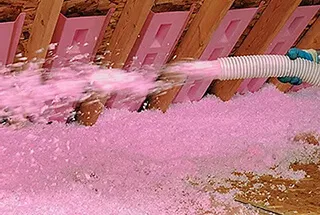
Blown-in fiberglass insulation uses loose-fill material delivered through a specialized blowing machine and hose. The installer distributes the material across an attic floor or packs it into a wall cavity.
Unlike batts, blown-in insulation does not arrive in fixed panels. It can flow around framing, wires, ductwork, boxes, and other obstacles. This makes it particularly useful in existing homes and attics with complicated layouts.
How blown-in fiberglass is installed
For an attic application, the installation process generally includes:
- Inspecting the attic and ventilation system.
- Air-sealing penetrations, chases, and top plates where needed.
- Protecting recessed lights, flues, and other heat-producing components according to applicable requirements.
- Installing or confirming proper ventilation baffles.
- Blowing fiberglass to the specified depth.
- Measuring the final depth to verify that the target R-value is reached.
For closed walls, dense-pack blown-in fiberglass is installed through carefully placed access holes. The material is packed at a specified density to reduce settling and provide consistent coverage throughout the cavity.
Armored Insulation provides blown-in insulation services for attic spaces and wall applications. The material can fill areas that are difficult to cover with pre-cut batts.
R-Value per Inch: What Homeowners and Builders Should Know
R-value measures resistance to heat flow. A higher R-value generally means greater resistance to heat transfer, but the total performance depends on thickness, installation quality, air leakage, moisture control, and the rest of the building assembly.
Typical ranges include:
- Fiberglass batts: approximately R-3.0 to R-4.3 per inch
- Blown-in fiberglass for attics: approximately R-2.2 to R-2.7 per inch
- Dense-pack blown-in fiberglass for walls: approximately R-3.7 to R-4.3 per inch
These are general ranges. Actual performance varies by product, density, thickness, and manufacturer specifications. Contractors should always verify the product label and project requirements before installation.
Because attic blown-in fiberglass generally has a lower R-value per inch than high-density batts, it may require more depth to reach the same total R-value. That additional depth is not a disadvantage when the attic has enough room. In fact, the greater depth helps provide a more uniform thermal blanket.
The U.S. Department of Energy’s insulation guidance and product-specific installation instructions should be used when determining target insulation levels.
Coverage Quality: Where Blown-In Often Has the Advantage
Batts can perform very well when they are cut and fitted precisely. However, attic spaces often include many obstacles that make perfect fitting difficult.
Blown-in fiberglass can provide more consistent coverage around:
- Electrical wiring
- HVAC ductwork
- Plumbing penetrations
- Attic framing
- Junction boxes
- Tight corners
- Irregular rooflines
- Existing insulation that remains in place
This coverage is one reason blown-in insulation is often preferred for attic retrofits. The material forms a continuous layer with fewer seams and fewer opportunities for visible gaps.
Batts can still be an effective attic option in a simple, open layout. However, gaps, compression, and poorly fitted edges can reduce the practical performance of the assembly. The Green Building Advisor attic insulation paper discusses how installation quality and gaps affect real-world insulation performance.
Cost Comparison: Where Batts Usually Win
Fiberglass batts commonly have a lower material cost and can be economical when installed in open, uniform cavities. They are also easier to handle on many new construction projects where the framing is accessible and the cavity dimensions are consistent.
Blown-in insulation may cost more per square foot in some applications because it requires specialized equipment, trained labor, and additional material depth. However, the total price depends on more than the material itself.
A practical comparison looks like this:
Fiberglass batt insulation
- Often the lower-cost option for simple wall cavities
- Efficient for large new construction projects with open framing
- Requires more cutting and fitting around obstructions
- May create more waste if cavity sizes vary
- Installation quality has a major effect on performance
Blown-in fiberglass insulation
- May have a higher installation cost on straightforward projects
- Often more efficient for irregular attic layouts
- Covers difficult areas with less cutting and fitting
- Can reduce gaps around wires, ductwork, and framing
- Requires professional blowing equipment and depth verification
Cost guides often place installed fiberglass batt insulation around $0.50 to $1.50 per square foot, while blown-in fiberglass commonly falls within a broader range of approximately $0.75 to $1.70 or more per square foot. Regional labor rates, attic access, insulation depth, air sealing, removal work, and project size can change the final price substantially.
The lowest initial price is not always the lowest long-term cost. Better coverage can improve comfort, reduce heating and cooling demand, and limit future correction work.
Which Option Fits Each Project?
For new construction walls
Fiberglass batt insulation is usually a practical choice when the wall cavities are open and easy to access. It fits naturally into standard framing and allows builders to plan insulation placement before drywall installation.
Dense-pack blown-in fiberglass can also work well in new construction, particularly when the project prioritizes uniform cavity coverage or improved sound control.
For existing wall retrofits
Dense-pack blown-in fiberglass is often the better fit. Small access holes allow installers to fill closed wall cavities without removing large sections of drywall or siding. The material can move around wiring and other obstructions more effectively than a batt inserted through a limited opening.
For attic upgrades
Blown-in fiberglass is often the preferred option for attic floors. It can cover a large surface quickly and fill around the irregular features found in many existing attics.
Before installation, the attic should be inspected for moisture problems, ventilation concerns, recessed lighting, ductwork issues, and air leaks. Insulation should not be used to conceal an unresolved roof or moisture problem.
For budget-focused projects
Fiberglass batts can make sense when the building has open, uniform cavities and the installation can be completed carefully. Batts provide a dependable thermal layer without the equipment requirements of blown-in systems.
Air Sealing Complements Both Materials
Neither fiberglass batts nor blown-in fiberglass should be treated as a complete air barrier. Fiberglass slows conductive heat transfer, but air can still move through gaps, penetrations, chases, and other openings.
Effective energy efficient home insulation typically combines insulation with air sealing around:
- Plumbing and electrical penetrations
- Top plates
- Attic hatches
- Duct penetrations
- Chimneys and flues
- Recessed lights
- Wiring holes
- Open wall chases
Air sealing should generally be completed before attic insulation is installed. This allows the insulation to remain a continuous thermal layer rather than covering air leaks that still allow conditioned air to escape.
The Bottom Line
Fiberglass batt and blown-in fiberglass insulation are both useful products. The better choice depends on the project layout, access, desired R-value, installation conditions, and budget.
- Choose fiberglass batt insulation for open wall cavities, straightforward new construction, and cost-conscious applications.
- Choose blown-in fiberglass insulation for attic retrofits, irregular spaces, and areas with many wires, ducts, and tight corners.
- Choose dense-pack blown-in fiberglass for many existing wall retrofits.
- Pair either option with professional air sealing for stronger building performance.
Armored Insulation provides residential insulation services and insulation for new construction throughout Western Kentucky, Northwest Tennessee, Southern Illinois, and Southeastern Missouri. We can review the building layout, explain the available options, and help identify a practical solution for the project and budget.
Request a free estimate through our Jobber service request form.