
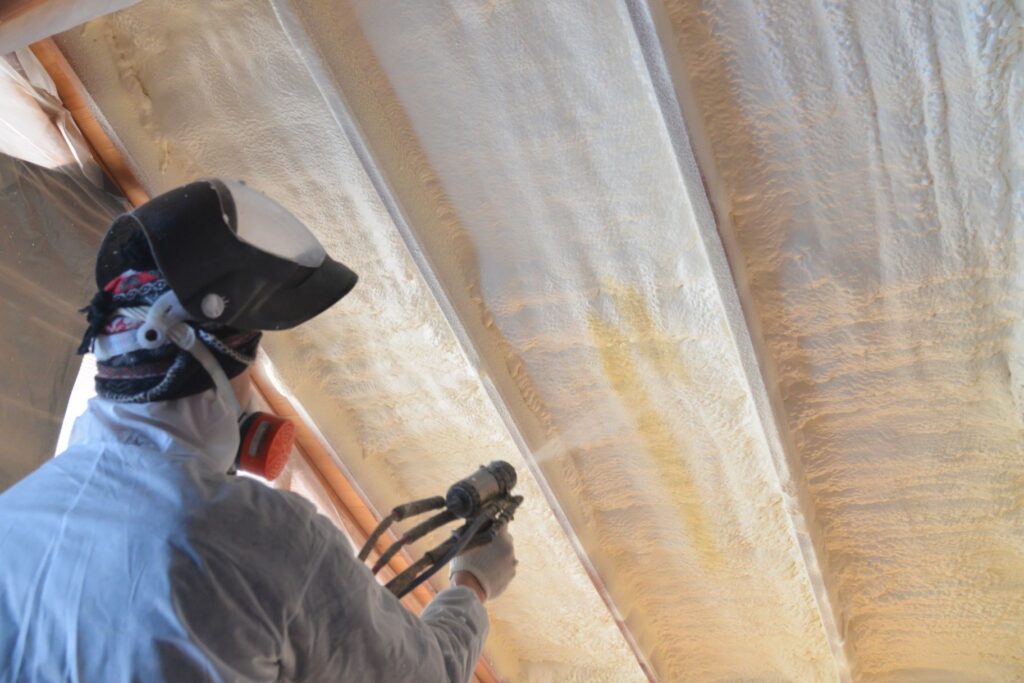
When it comes to upgrading your home’s thermal envelope, choosing the right insulation is one of the most impactful decisions you can make. For homeowners and general contractors across Western Kentucky, Northwest Tennessee, Southern Illinois, and Southeastern Missouri, spray foam has quickly become the gold standard for sealing drafts, boosting structural comfort, and shrinking monthly utility bills.
However, walking into a spray foam project means making a crucial choice: open-cell or closed-cell spray foam?
While both options outperform traditional fiberglass batts when it comes to stopping air leakage, they have vastly different physical properties, price points, and ideal applications. Understanding these differences ensures you invest in the right material for your specific climate zone, budget, and building structure.
What Is Open-Cell Spray Foam?
Open-cell spray foam gets its name from its cellular structure, where the tiny cells of the foam are deliberately left open rather than encapsulated. This creates a lighter, softer, and more flexible material: often weighing about 0.5 pounds per cubic foot.
Because the cells are open, the foam remains spongy to the touch. When applied to wall cavities or rooflines, it expands rapidly: often up to 100 times its original liquid volume: filling every crack, crevice, and awkward gap around wiring and ductwork.
Key Characteristics of Open-Cell Spray Foam:
- R-Value per Inch: Typically ranges between R-3.5 and R-4 per inch.
- Moisture Performance: Permeable to water vapor, meaning it acts as an air barrier but allows moisture to dry out rather than trapping it.
- Sound Dampening: Its soft, porous structure makes it exceptional at absorbing airborne sound waves.
- Cost: Significantly more budget-friendly than closed-cell foam.
Best Uses for Open-Cell Spray Foam:
- Interior Walls: Excellent for interior soundproofing between bedrooms, bathrooms, and media rooms.
- Unvented Attics: When applied to the underside of a roof deck in a conditioned attic, open-cell foam provides plenty of thermal resistance without adding excessive weight to the roof framing.
- Budget-Conscious Projects: Ideal for homeowners looking to achieve a superior air seal without the premium price tag of closed-cell products.
What Is Closed-Cell Spray Foam?
In contrast, closed-cell spray foam features densely packed cells that are completely closed and filled with a specialized blowing agent. Because the cells are sealed and encapsulate a high-performance gas, the foam cures into a rigid, rock-solid plastic matrix.
Weighing roughly 2.0 pounds per cubic foot, closed-cell foam adds noticeable rigidity and structural integrity to whatever surface it touches: whether that’s wood framing, concrete foundation walls, or metal roof decking.

Key Characteristics of Closed-Cell Spray Foam:
- R-Value per Inch: Delivers roughly R-6 to R-7 per inch, giving it double the insulating power of open-cell in the exact same thickness.
- Moisture and Vapor Barrier: At a thickness of two inches or more, closed-cell foam acts as a class-II vapor retarder, stopping liquid water and moisture vapor migration in its tracks.
- Structural Enhancement: Adds sheer strength to walls and roof sheathing, making buildings more resistant to wind and impact.
- Closed Cell Spray Foam Cost: Carries a higher upfront material and labor cost due to its dense chemical formulation.
Best Uses for Closed-Cell Spray Foam:
- Basements and Crawlspaces: Perfect for subterranean walls where dampness, humidity, and hydrostatic pressure are constant battles.
- Rim Joists: Essential for sealing the junction where the foundation meets the wooden floor framing, stopping cold drafts at ground level.
- Exterior Walls with Limited Depth: Ideal when you need to hit high building-code R-values in standard 2×4 or 2×6 wall cavities where thickness is restricted.
Head-to-Head Comparison: Cost, R-Value, and Performance
To help you and your contractor evaluate your options, let’s break down how open-cell and closed-cell foam stack up across four key categories:
1. R-Value and Space Efficiency
If you are working with limited physical space: such as shallow roof rafters or exterior walls: closed-cell foam is the clear winner. Because it packs R-6 to R-7 per inch, you can achieve high thermal resistance in a fraction of the thickness required by open-cell (~R-3.5 to R-4 per inch). Open-cell requires roughly double the thickness to reach the same target R-value, making it better suited for spacious attics and deep wall cavities where thickness is not restricted.
2. Evaluating Spray Foam Insulation Cost
Budget is always a top priority for residential homeowners and commercial builders alike. Open-cell spray foam is the more economical choice, typically costing significantly less per board foot than closed-cell.
When looking at closed cell spray foam cost, expect a higher price tag. The increased cost reflects its higher density, greater chemical volume, twice the R-value per inch, and built-in vapor barrier properties. However, view this higher initial investment as long-term energy efficient home insulation that pays dividends through decades of minimized heating and cooling bills.

3. Moisture Resistance and Vapor Retarders
In our humid regional climate, moisture management is critical. Open-cell foam lets moisture pass through as vapor, which is fine in dry vented assemblies but risky in damp environments where condensation can collect. Closed-cell foam creates a monolithic moisture and air barrier. It prevents humid summer air from condensing inside cold wall cavities, protecting your home against mold, mildew, and rot.
4. Structural Rigidity
Open-cell foam remains flexible and moves naturally with the expansion and contraction of building materials. Closed-cell foam cures hard, bonding tenaciously to framing members and effectively gluing the building shell together. For commercial buildings or older homes needing an extra boost in structural rigidity, closed-cell provides unbeatable reinforcement.
Choosing the Right Foam for Different Areas of Your Home
Every room in a house presents unique thermal and moisture challenges. Here is how professional installers typically deploy each type:
- Attics: In unvented cathedral ceilings, open-cell is frequently used because it is lightweight and cost-effective, easily spanning large rafter bays. However, if roof ventilation is sealed and local climate codes demand a high vapor-resistant R-value in a shallow roof deck, closed-cell is often specified.
- Basements & Crawlspaces: Always closed-cell. Subterranean spaces require moisture control and high R-values in tight perimeter spaces like rim joists.
- Interior Partition Walls: Open-cell is the ideal pick here. You don't need a vapor barrier between interior rooms, but you do want excellent acoustic dampening to keep household noise down.

Partnering with a Professional Insulation Contractor
Deciding between open-cell and closed-cell spray foam doesn't have to be a guessing game. Building codes, framing depths, HVAC sizing, and local climate factors all play a vital role in determining the ideal specification for your project.
Whether you are a general contractor managing a sprawling commercial new-construction build or a homeowner looking to lower your seasonal energy bills, working with an experienced spray foam insulation contractor ensures your investment performs flawlessly for years to come.
At Armored Insulation, we bring deep expertise and rigorous craftsmanship to every residential and commercial project across Western Kentucky, Northwest Tennessee, Southern Illinois, and Southeastern Missouri. We help you balance performance, durability, and budget so your property achieves maximum energy efficiency.
Get a Free Estimate Today
Ready to transform your home’s comfort and slash your utility bills? Contact the team at Armored Insulation today. We evaluate your property, discuss your goals, and provide tailored recommendations for your insulation project.
Visit our Free Estimate page to get started, or explore our full suite of services, including Spray Foam Insulation and Blown-in Wall Insulation, to discover how we can reinforce your building envelope.