

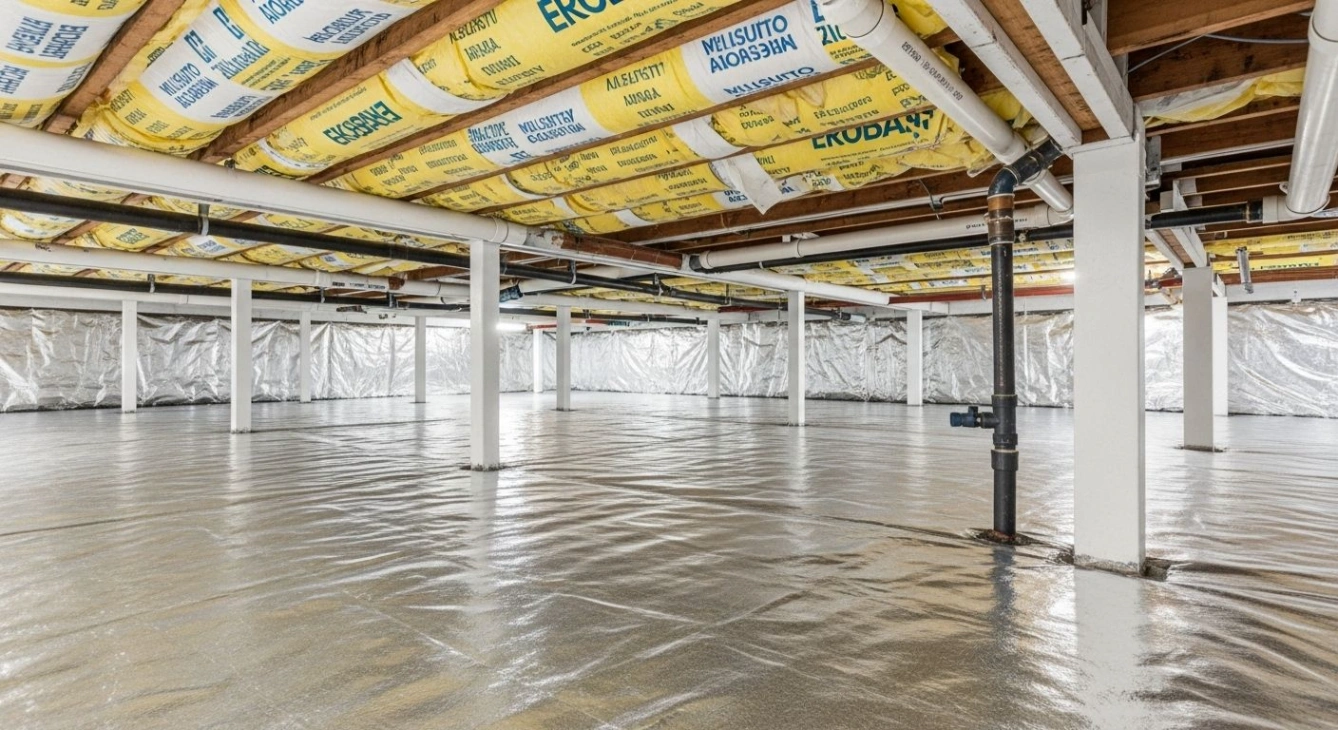
Crawl space encapsulation directly controls seasonal humidity by isolating the space from its two primary sources of moisture: the ground below and the outside air. By lining the ground and walls with a heavy-duty vapor barrier and sealing all vents and air leaks, encapsulation creates a controlled environment. This barrier stops water vapor from evaporating out of the soil and prevents humid summer air from entering the cool crawl space, where it would otherwise condense on surfaces and raise overall moisture levels.
This process effectively turns an open, damp area into a clean, dry space that is integrated with the rest of the home’s conditioned envelope. The result is stable, year-round humidity control that protects your home’s structural integrity and improves indoor air quality. This article explores the mechanics of how encapsulation works and why it is a definitive solution for seasonal moisture problems, drawing on information from extensive field experience and building science principles.
Traditionally, crawl spaces were built with vents to the outside. The theory was that these vents would allow moisture to escape. Unfortunately, in many climates, they do the opposite by allowing humid air in.
Two main factors contribute to high humidity in a typical vented crawl space:
A report from Advanced Energy notes that their studies on homes in the Southeast found that sealed crawl spaces can reduce a home’s energy use by up to 15-18% annually compared to vented ones. This highlights how much unconditioned, humid air can enter a home through a crawl space.
Air naturally flows from the lower levels of a home upwards, much like smoke rising in a chimney. This is called the stack effect. The U.S. Department of Energy explains that this effect can draw damp, musty air from the crawl space up into your living areas. This means a significant portion of the air you breathe inside your home first passed through your crawl space, carrying with it any moisture or mold spores present.
Crawl space encapsulation is a systematic process of sealing the area to manage moisture. It involves several distinct steps that work together to create a dry and stable environment.
Bonus Tip: The thickness of the vapor barrier is important for durability. A 12-mil or 20-mil liner is recommended over thinner materials, as it’s less likely to tear and will provide a more effective, long-lasting barrier.
The difference between a sealed, encapsulated crawl space and a traditional vented one is stark, especially when it comes to controlling humidity and improving energy efficiency.
| Feature | Vented Crawl Space | Encapsulated Crawl Space |
|---|---|---|
| Humidity Control | Poor; humidity levels fluctuate with outdoor weather. | Excellent; maintains a consistent, low humidity level. |
| Energy Efficiency | Low; unconditioned air enters, affecting home temperature. | High; creates a conditioned space, reducing HVAC load. |
| Air Quality | Poor; prone to musty odors, mold, and mildew. | Good; prevents mold growth and improves indoor air. |
| Structural Risk | High; moisture can lead to wood rot and pests. | Low; dry environment protects floor joists and beams. |
| Pest Control | Poor; vents and dampness attract insects and rodents. | Good; sealed environment denies entry and habitat for pests. |
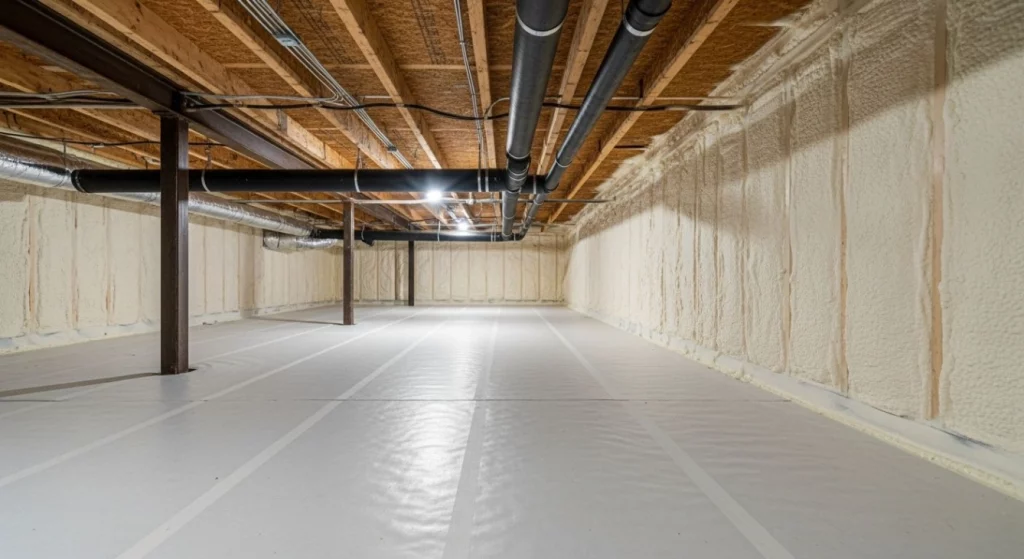
Before you commit to encapsulation, there are a few practical factors to evaluate to ensure the system will be effective.
Bonus Tip: Ask about the sealing process around pipes, support piers, and other penetrations. These are common failure points if not sealed meticulously.
Crawl space encapsulation offers a permanent solution to the seasonal humidity swings that cause so many problems for homeowners. By completely sealing the area from the ground and outside air, it stops moisture at the source. This protects your home’s foundation, improves the air you breathe, and can even lower your energy bills. Before proceeding, it is always a good idea to assess your home’s specific situation and consider the long-term benefits of creating a healthier environment from the ground up.
If you’re dealing with musty smells, damp floors, or high indoor humidity, the problem may be starting in your crawl space. For a thorough evaluation and to understand your options, contact the team at Armored Insulation. An expert can inspect your property and provide clear information tailored to your home’s needs. Reach out by calling (270) 331-4844 or sending an email to [email protected] to discuss how to create a drier, healthier home.
A professionally installed system using high-quality materials can last for 20 years or more. The lifespan depends on the durability of the vapor barrier and the quality of the installation. Regular, simple inspections can help ensure it remains effective.
Yes, and it’s one of the major benefits. An encapsulated crawl space is clean, dry, and suitable for storing items that are not sensitive to temperature changes. The durable liner protects stored items from ground moisture.
The target humidity level should be maintained between 30% and 50%. A properly sized dehumidifier will automatically monitor and control this, running only when needed to maintain the set level.
A dry, healthy crawl space can be a positive selling point. It shows that the home has been well-maintained and is protected from common issues like mold, rot, and pests. This can make the home more attractive to potential buyers.